

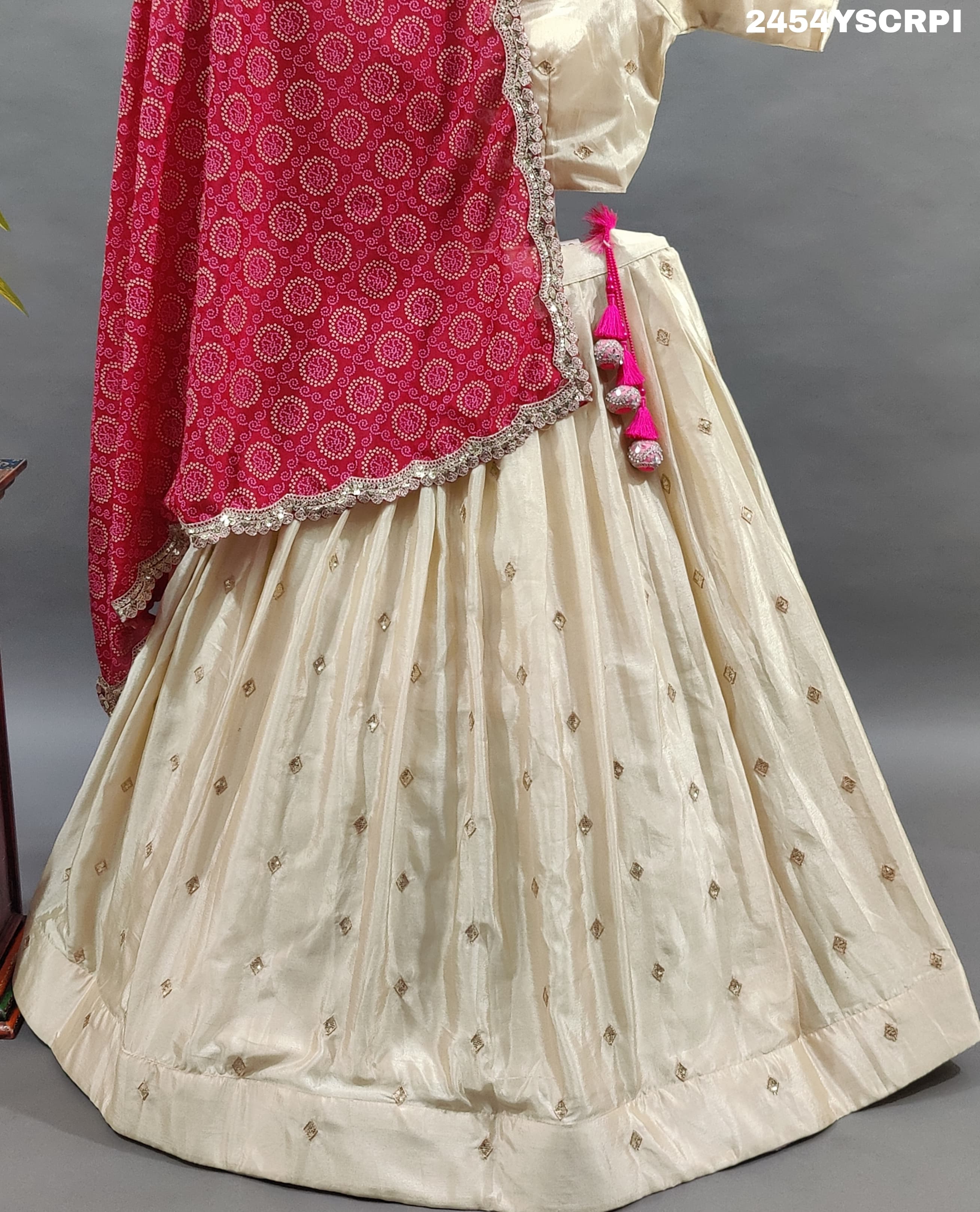
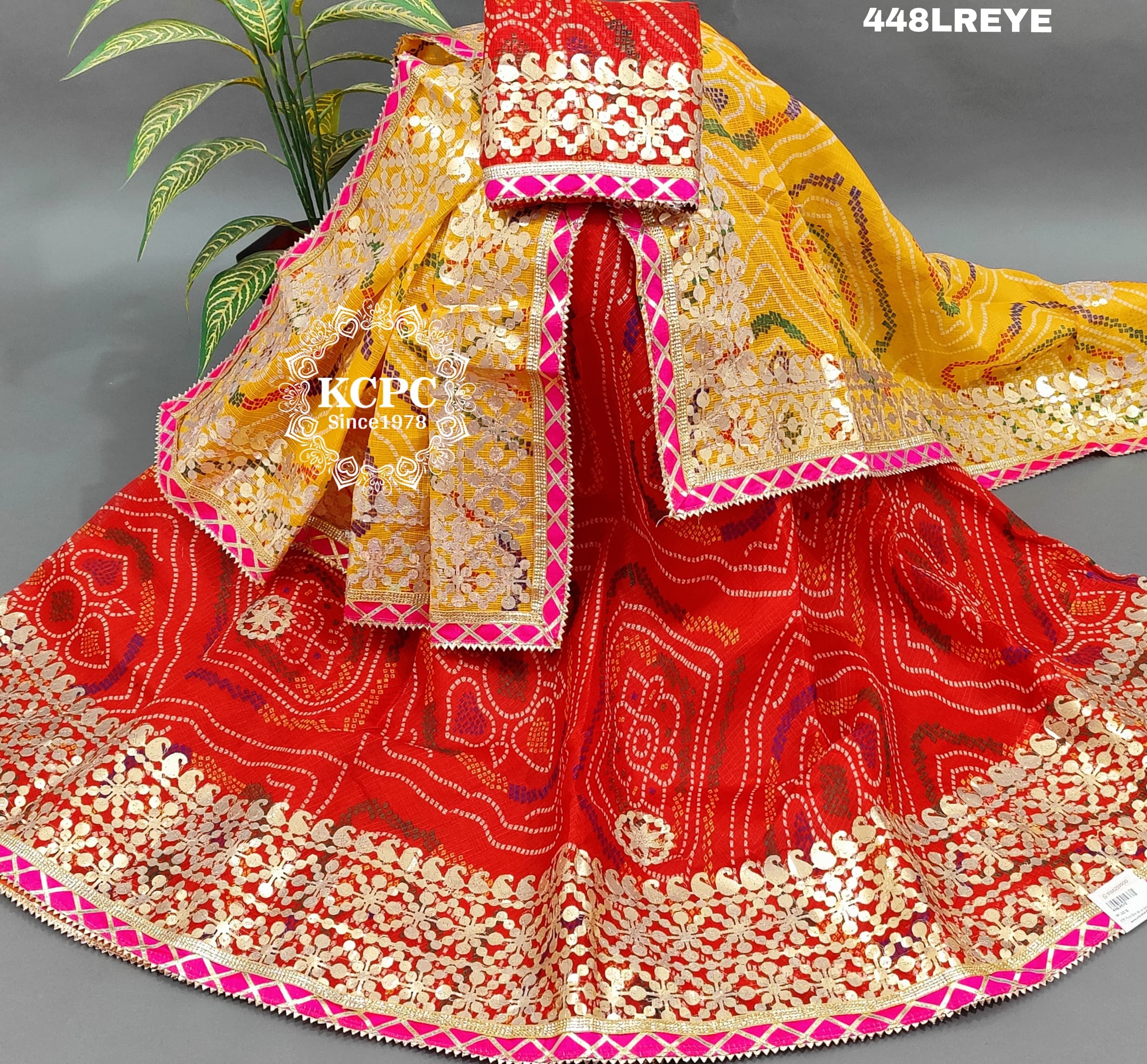
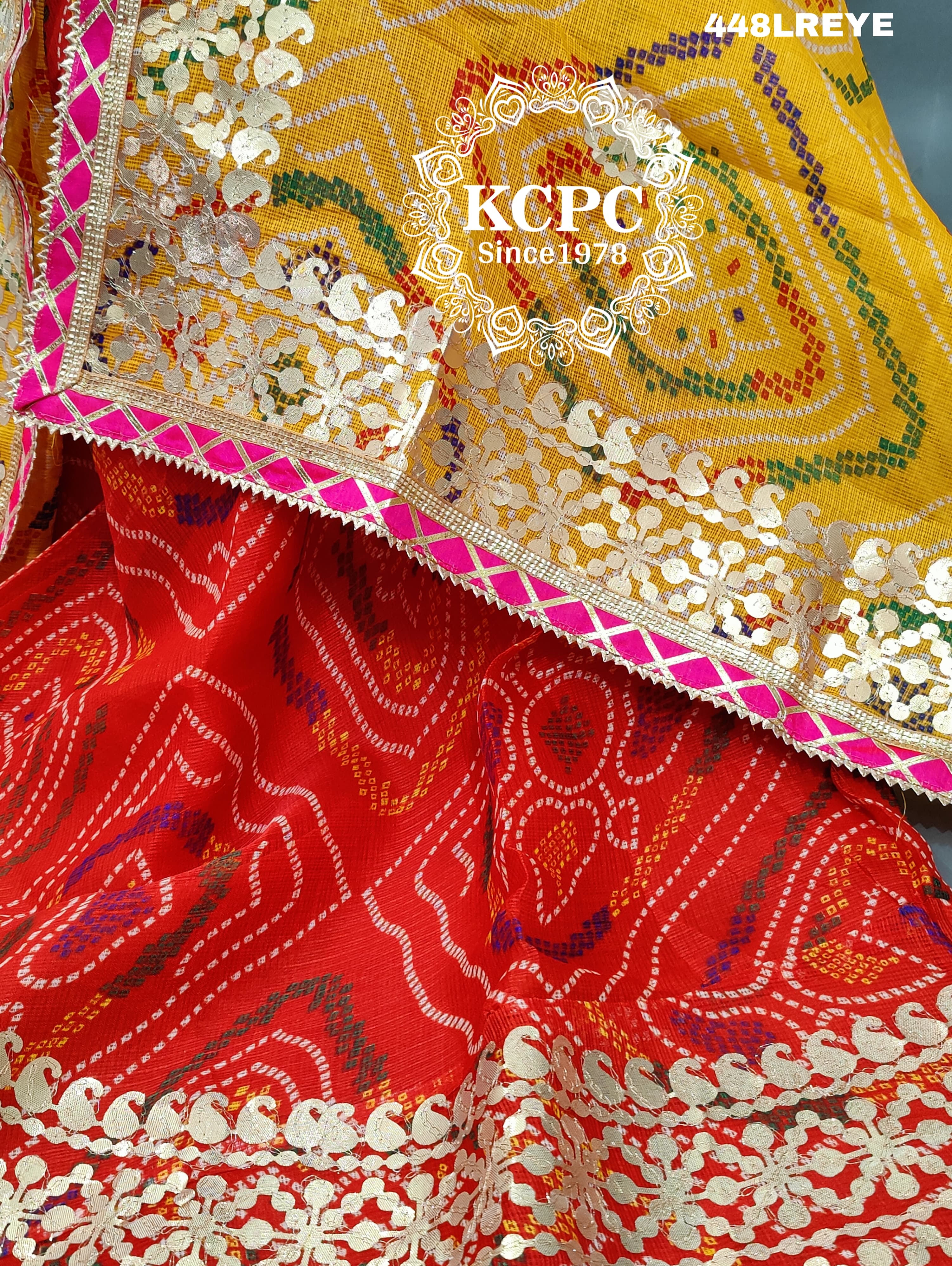
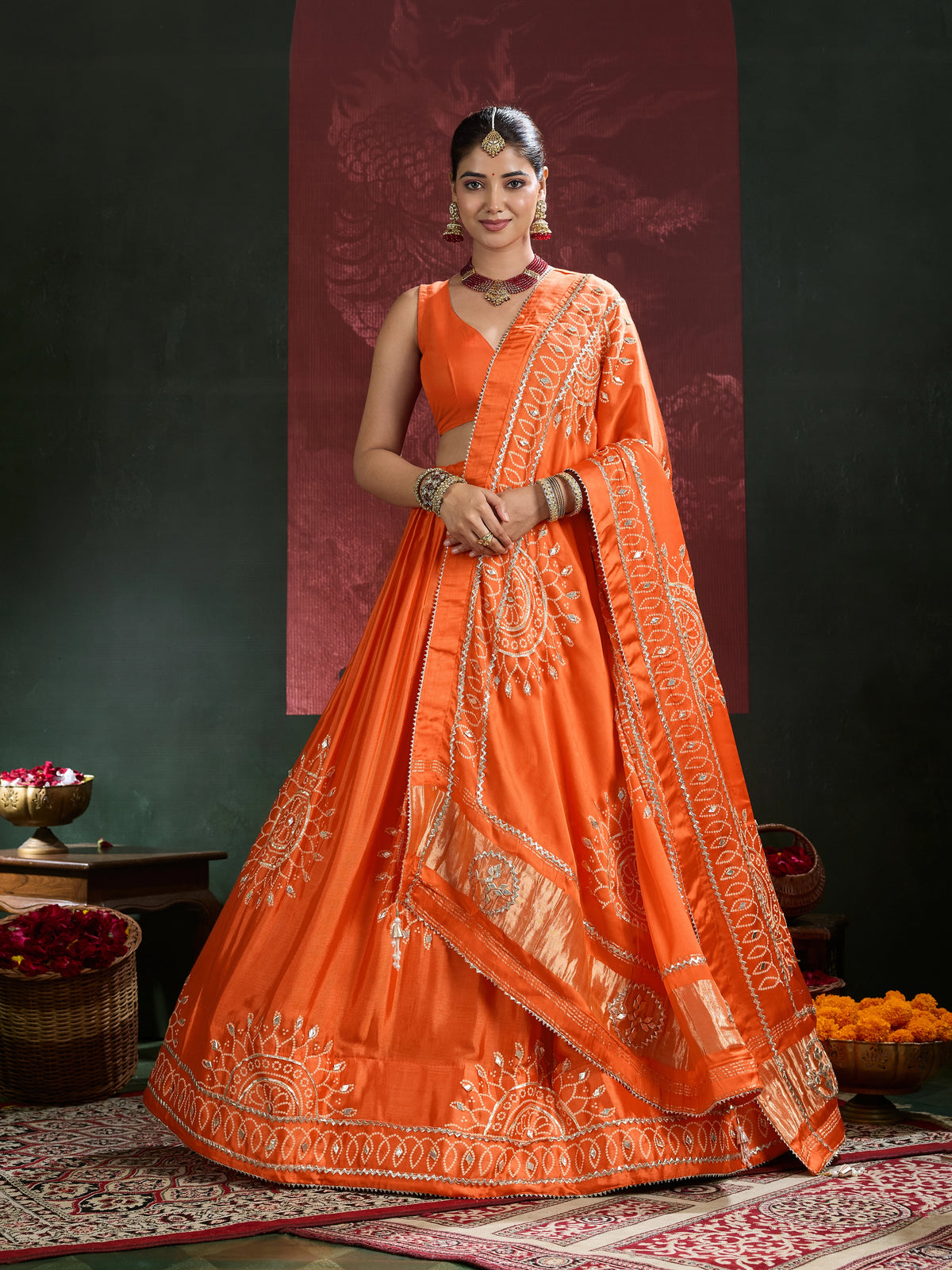
Bandhani Lehenga
Bandhani Lehenga - Fabric, Design, Styling, Jewellery and Care Guide | KCPC Bandhani
Pick up a bandhani lehenga and look at one small dot that dot is not printed. A woman picked up the cloth with her nail wrapped a thread around it and tied a knot. Then she did it again and again almost forty thousand times for one lehenga.
A good worker ties around one thousand knots in a day. So one lehenga is more than one month of her work.
Once you know this the price stops feeling high at KCPC Bandhani every piece is still tied by hand.
1. Choose the fabric first design later
Most people see a design, fall in love with it and buy it. Then they wear it and cannot even sit comfortably.
Do it the other way fabric first.
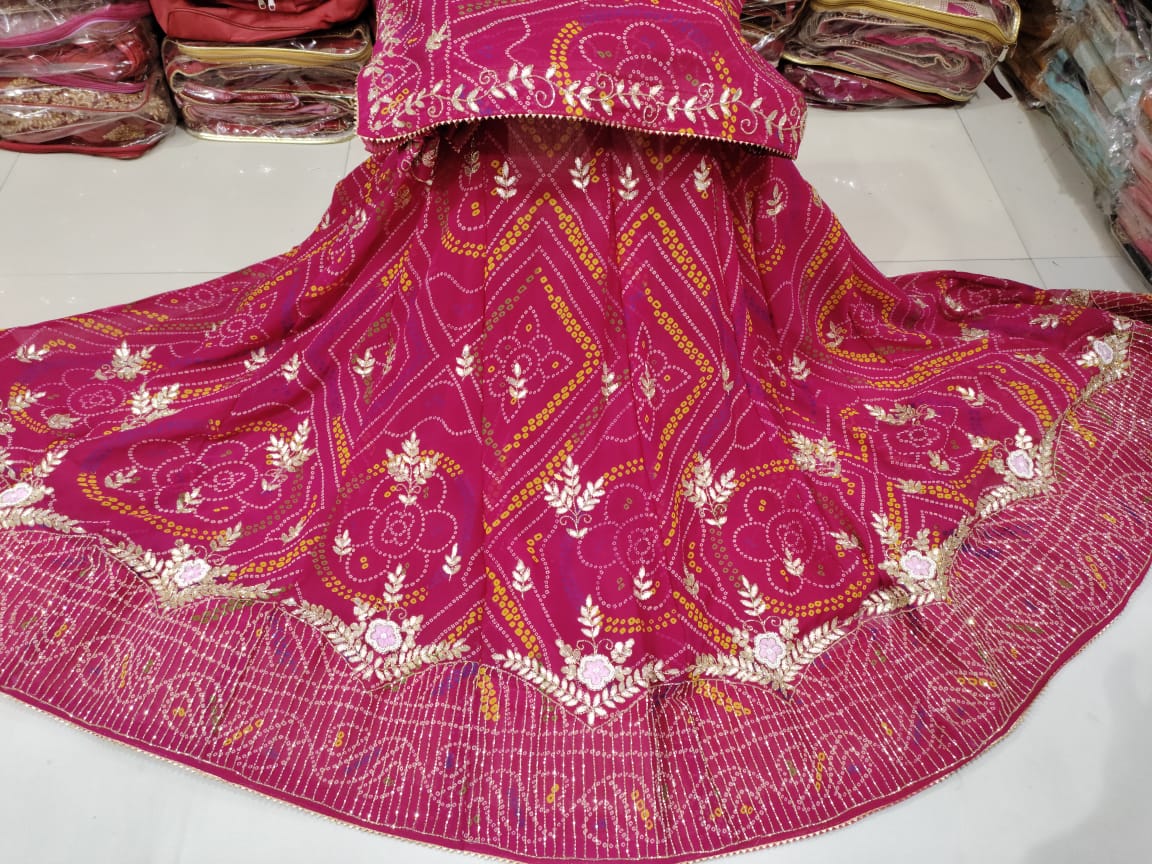
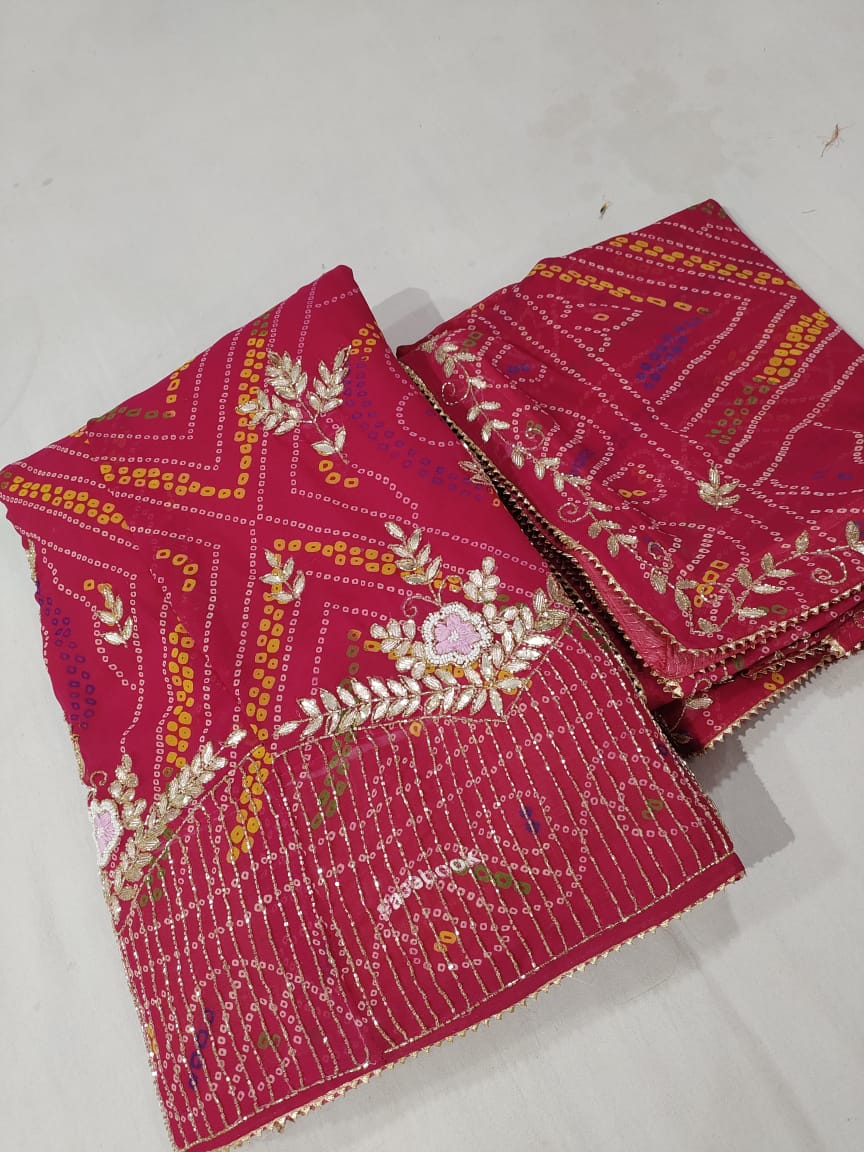
- Gaji silk - smooth and shiny. It opens out beautifully when you turn. Best for evening weddings right now this is what people are buying most.
- Georgette - light It moves with your body. If you are going to dance take this one.
- Chinon - soft shine comes out very nice in photos. Good for sangeet and mehndi.
- Cotton - the Navratri fabric. Nine nights of garba - no other fabric can take that much sweat.
- Pure silk - heavy and royal but be honest, it is a winter fabric in May you will feel like you are carrying a blanket.
Simple rule day function - cotton or georgette. Night function - gaji silk or pure silk.
2. The dots have names
Every dot pattern has a name and every pattern has its own rate.
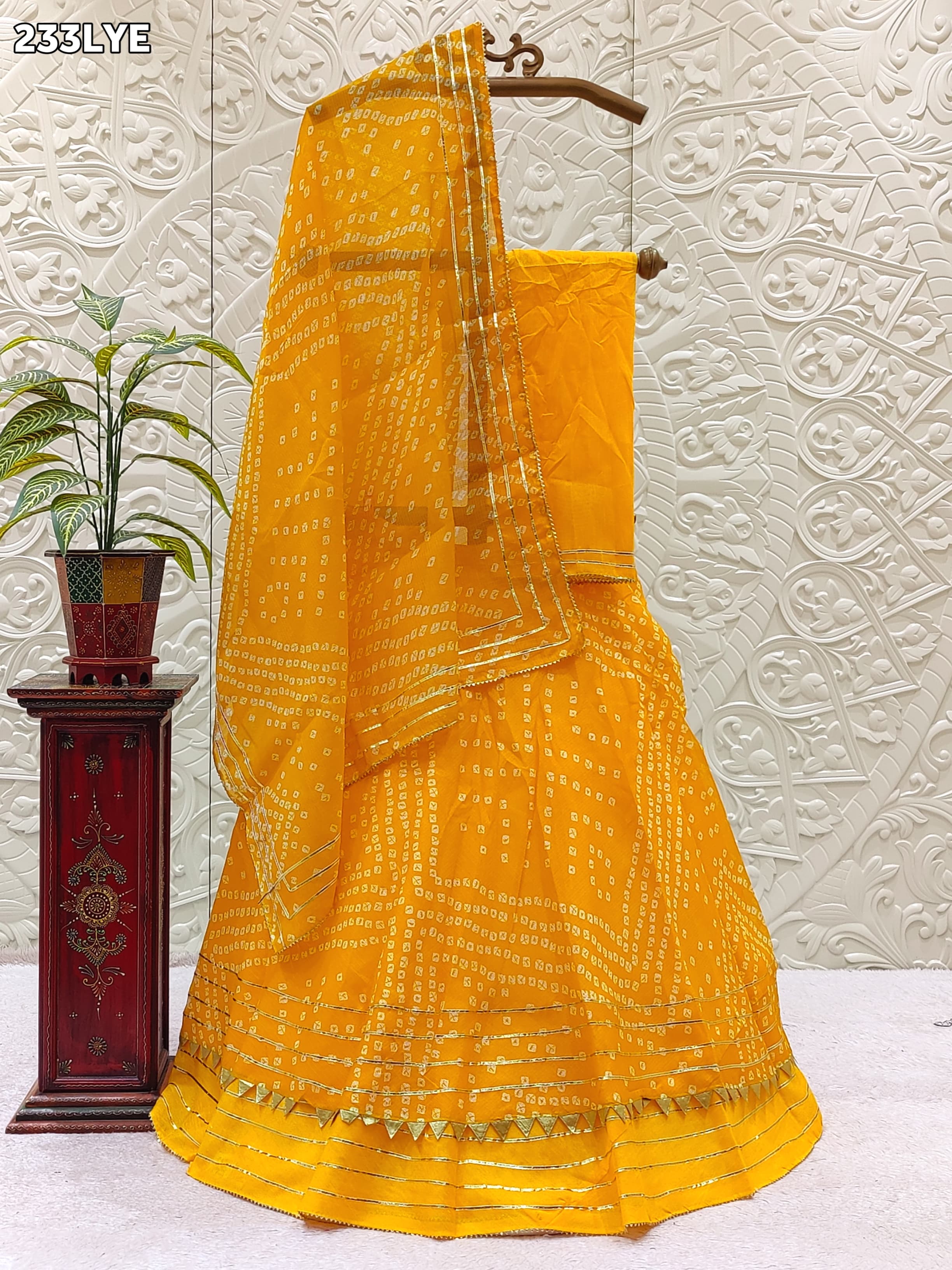
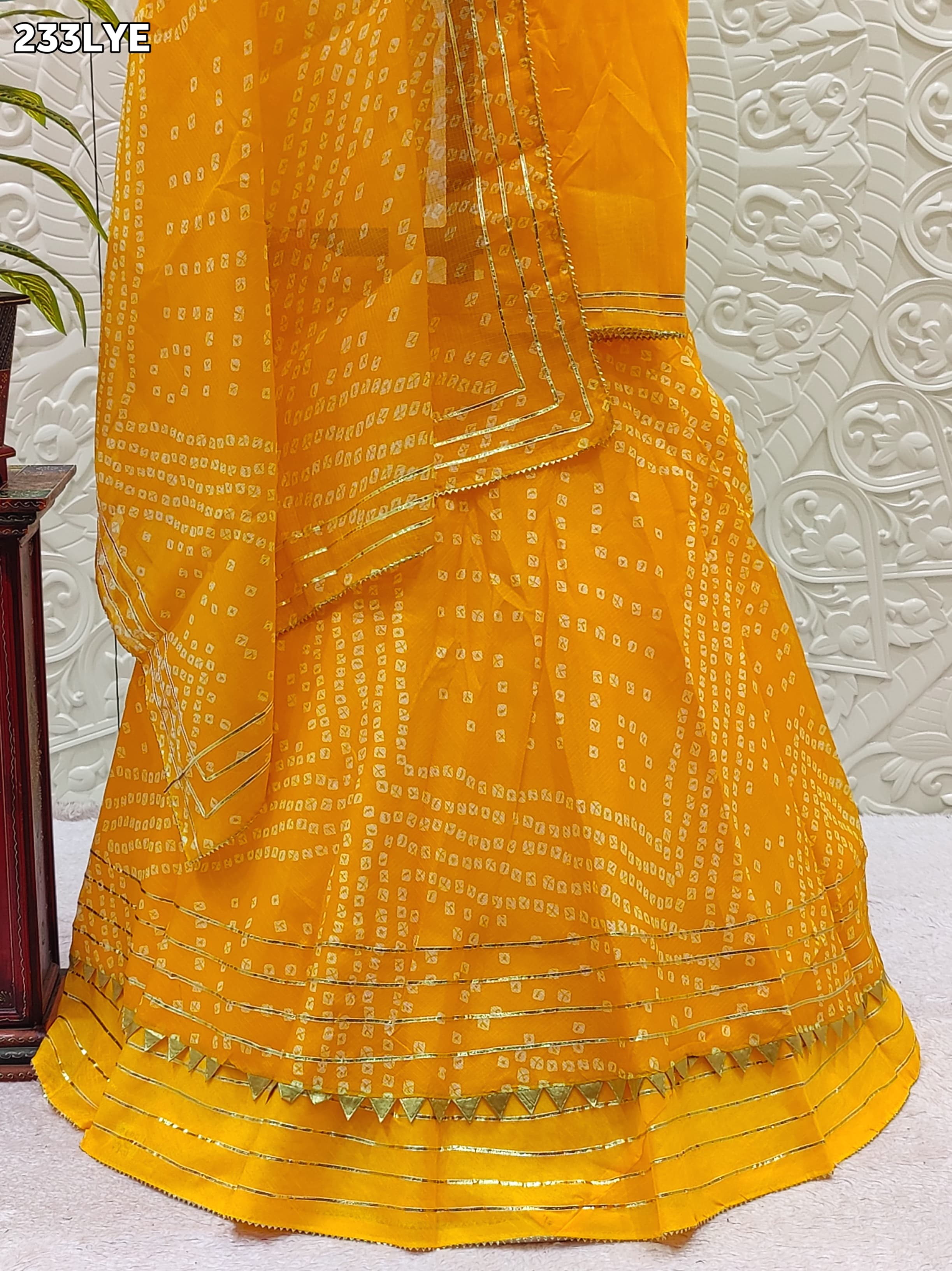
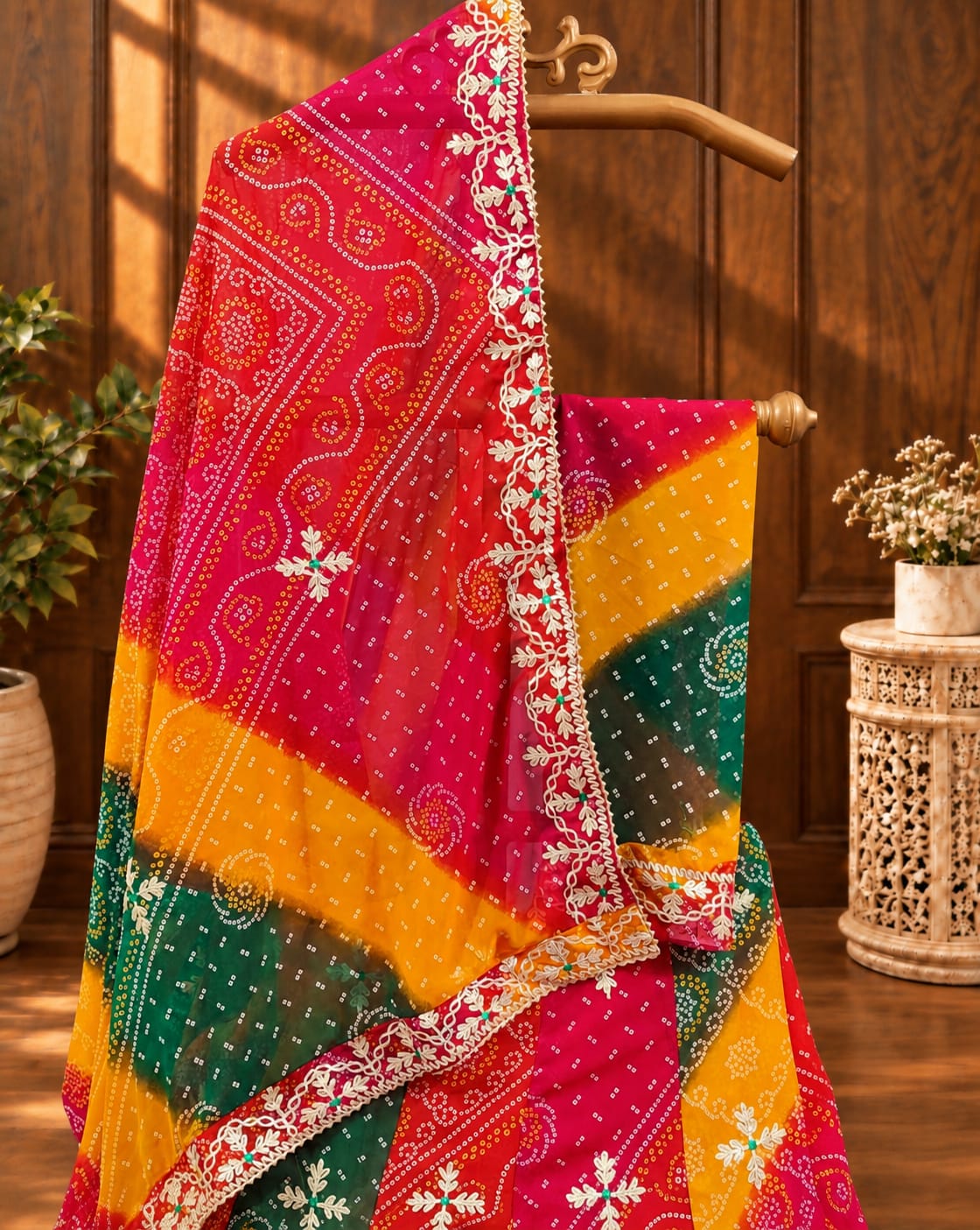
- Chaubundi - four dots making a square the most common one on lehengas.
- Boond - one dot with a dark centre looks like a drop of water.
- Kodi - a teardrop shape many of them join together and make paisleys.
- Shikari - the showpiece. Here the dots make elephants, peacocks and dancing figures this is master work that is why it costs much more than a plain dotted piece.
3. What is selling this season
Bandhani changes slowly that is the good part it never looks old fashioned.
But some things are clearly running right now.
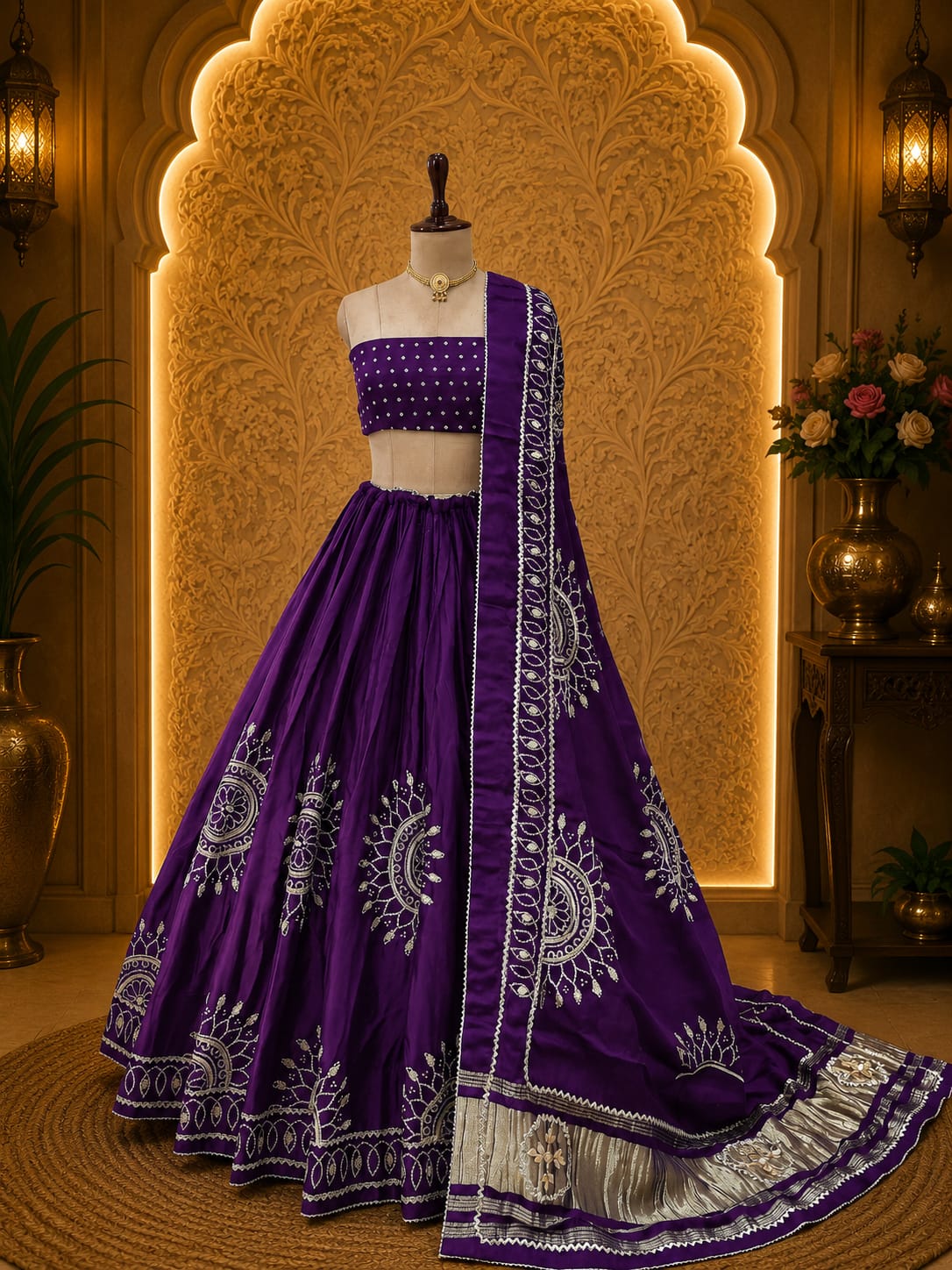
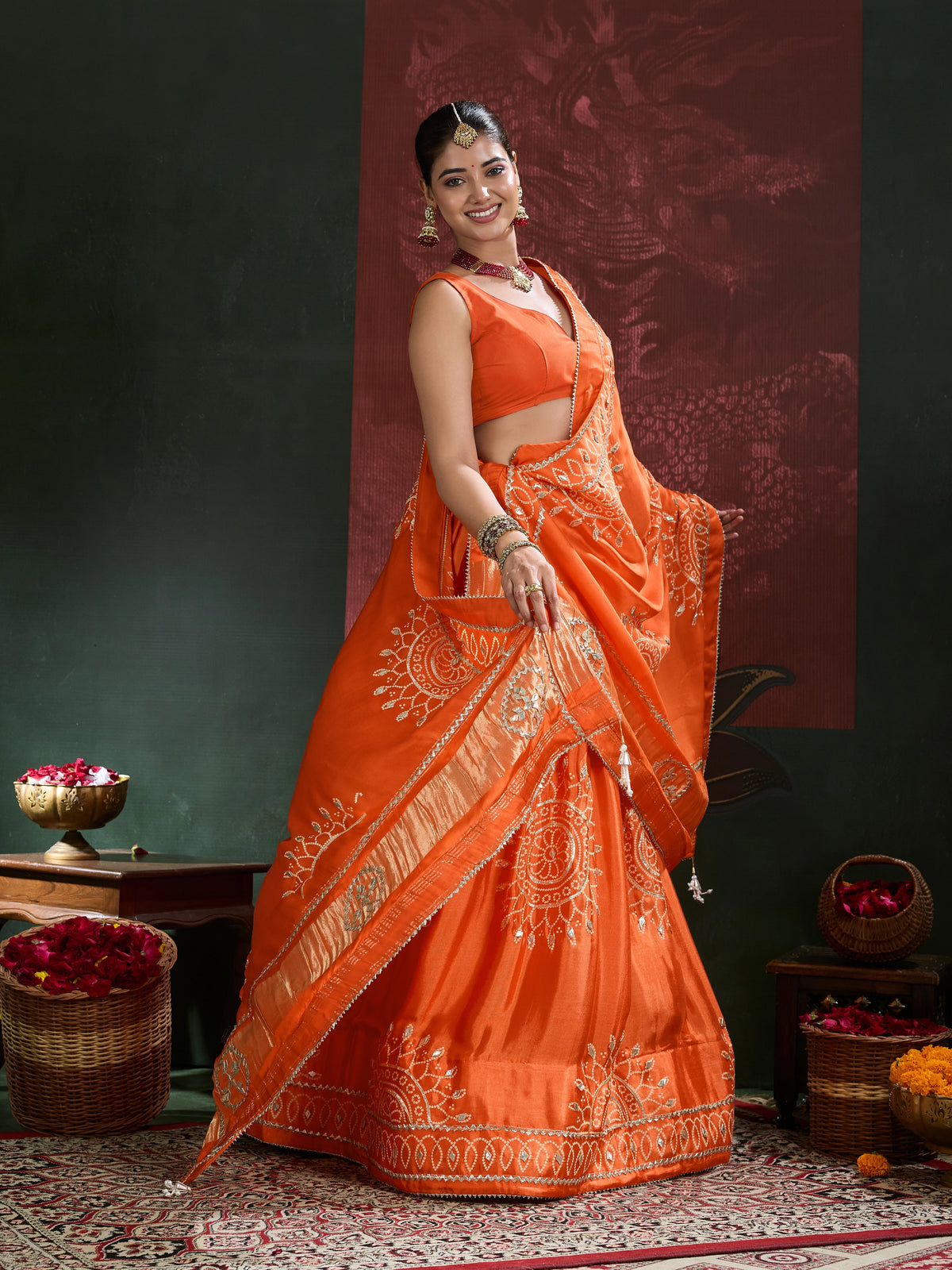
Gaji silk has taken over the market. Black bandhani which nobody would wear to a function ten years back is now the first colour young girls pick up. Ghera is getting bigger. Mirror work is everywhere. Pastels like mint and powder blue are filling up day weddings belts are back. and crop tops have replaced the old fitted choli.
But the biggest change is not a design at all people now buy one good piece instead of three cheap ones then they change the blouse and the jewellery and it looks new every time.
4. Colour by the function
Dark colours go flat in sunlight. Light colours get lost under yellow lights.
So light shades for day deep shades for night.
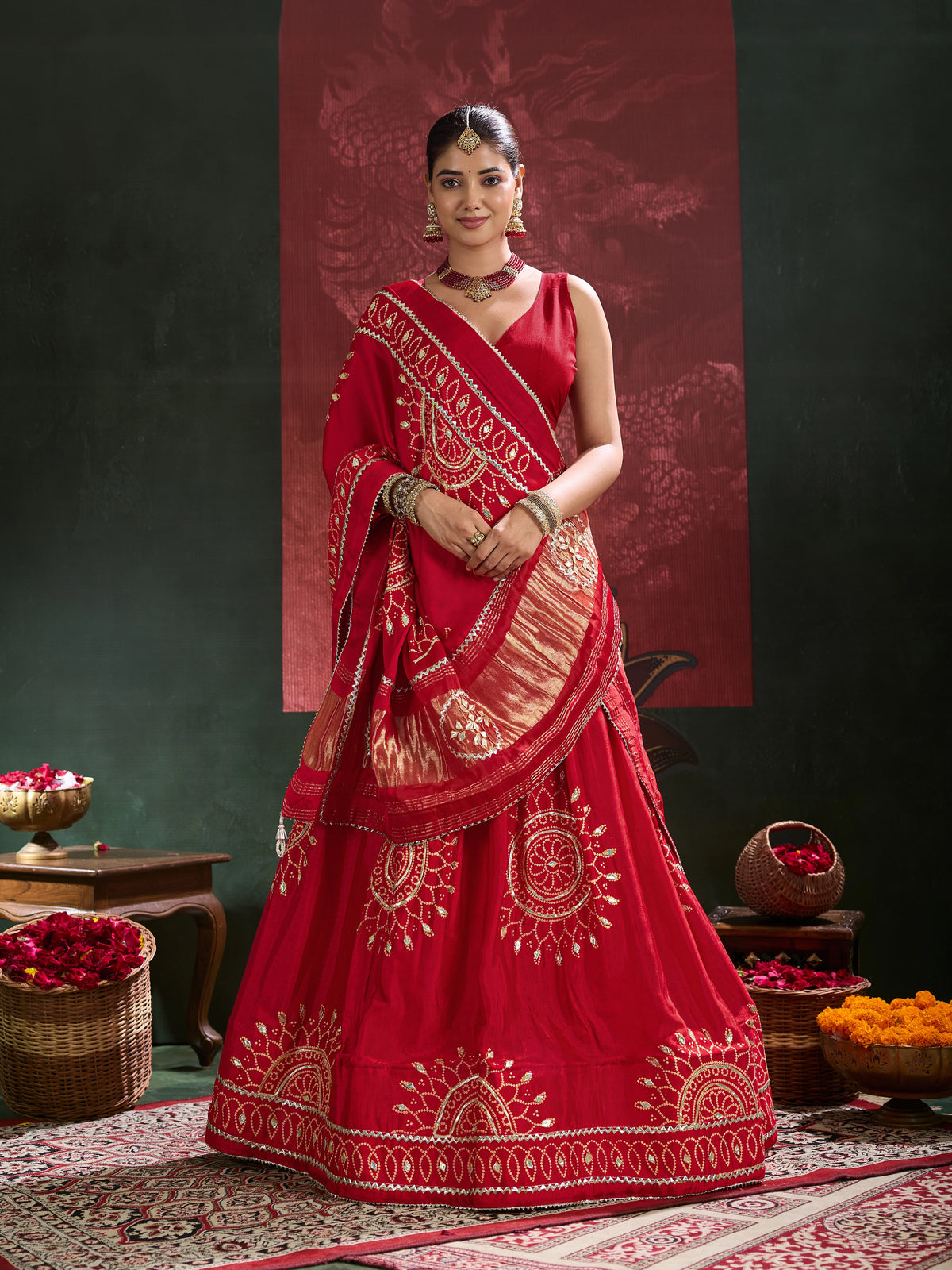
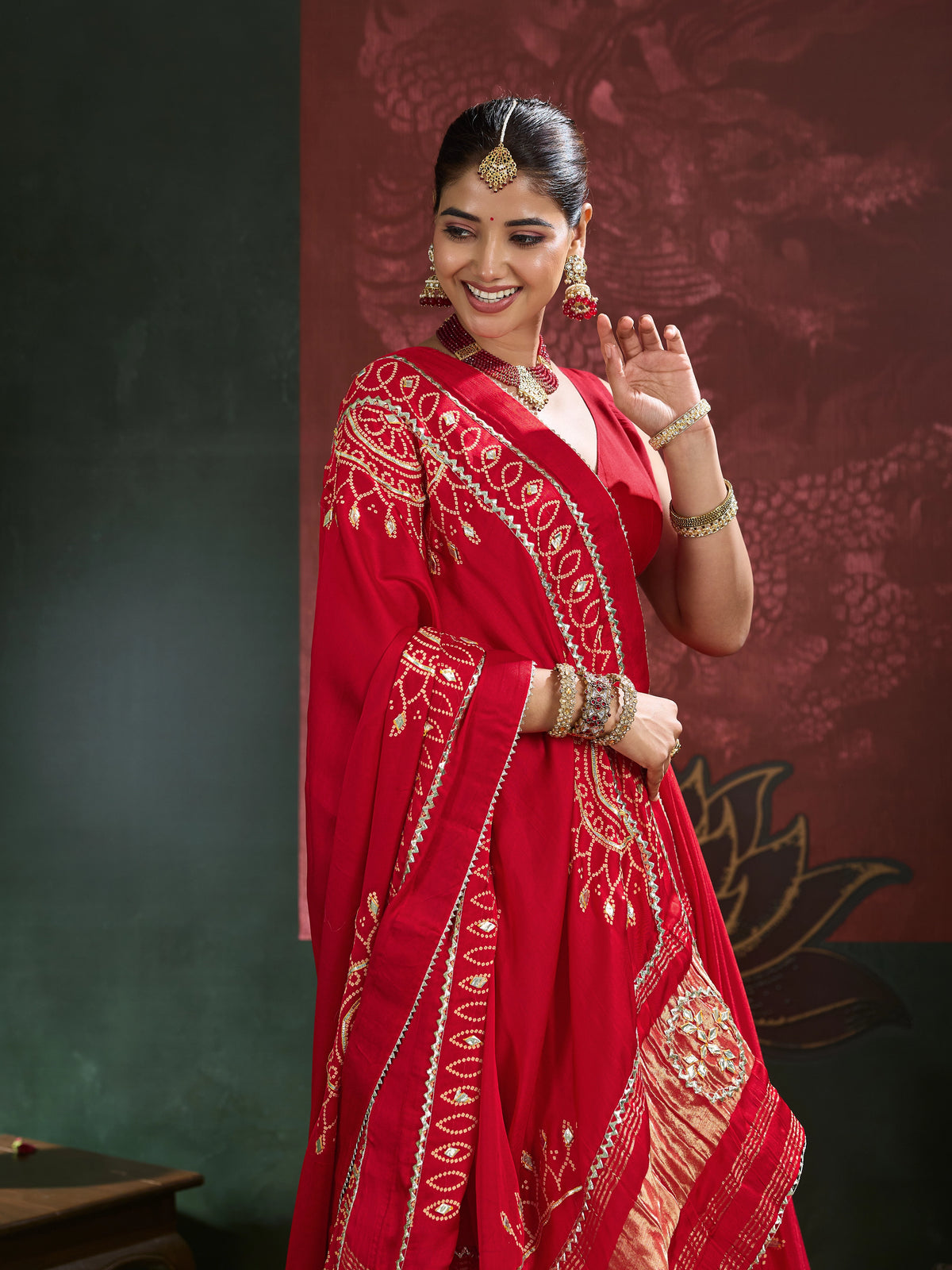
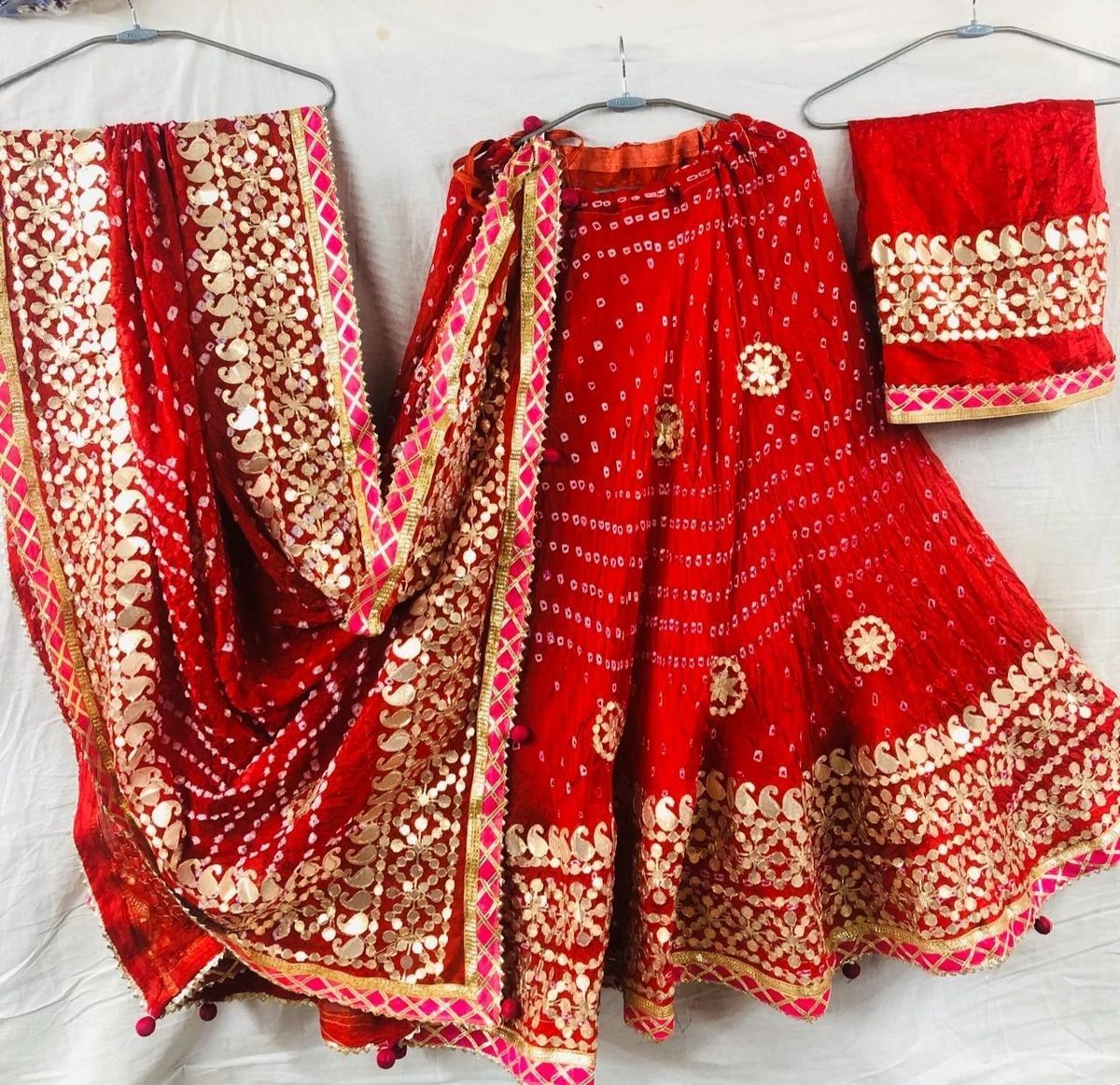
- Red maroon - bride, wedding day
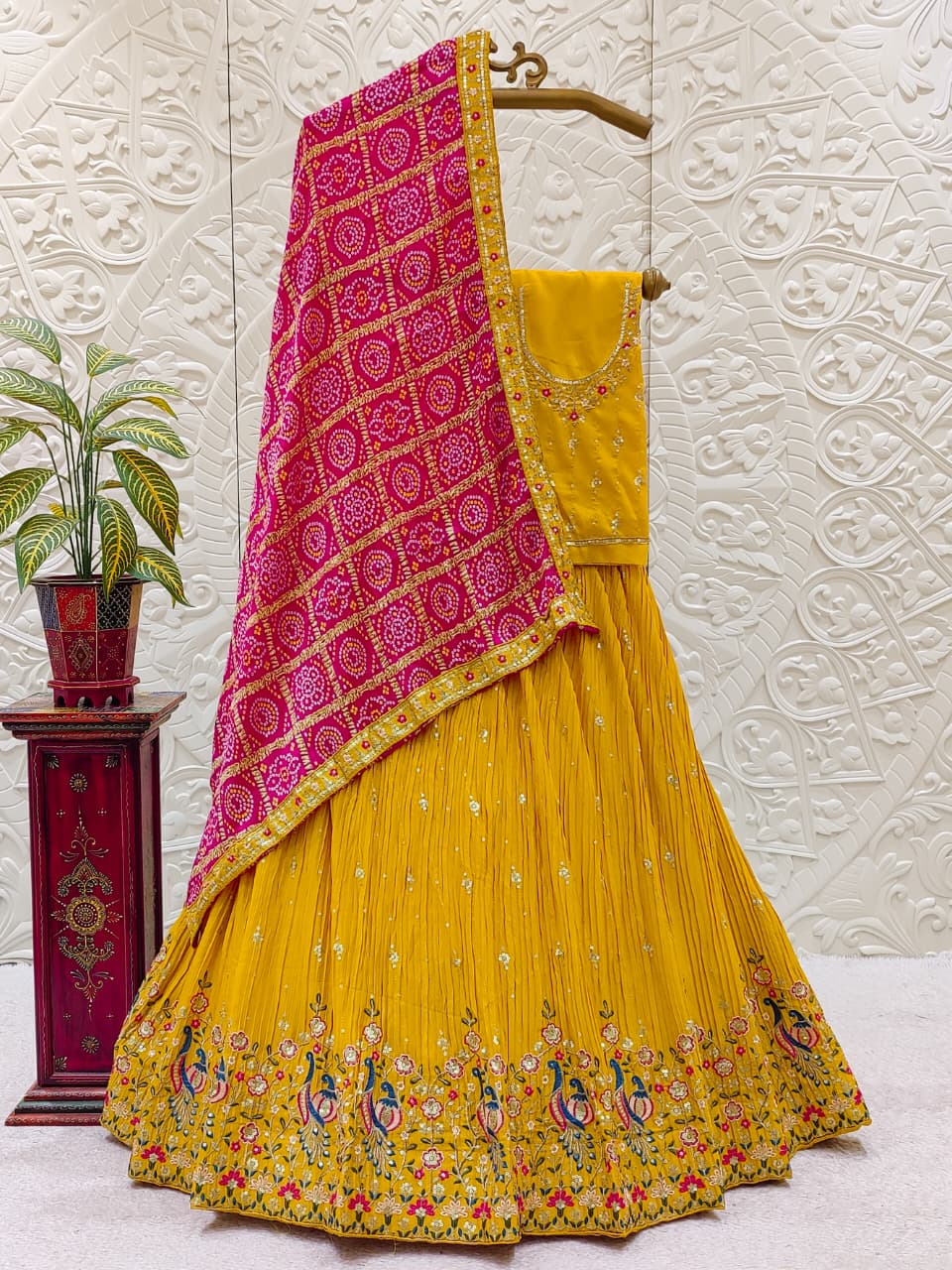
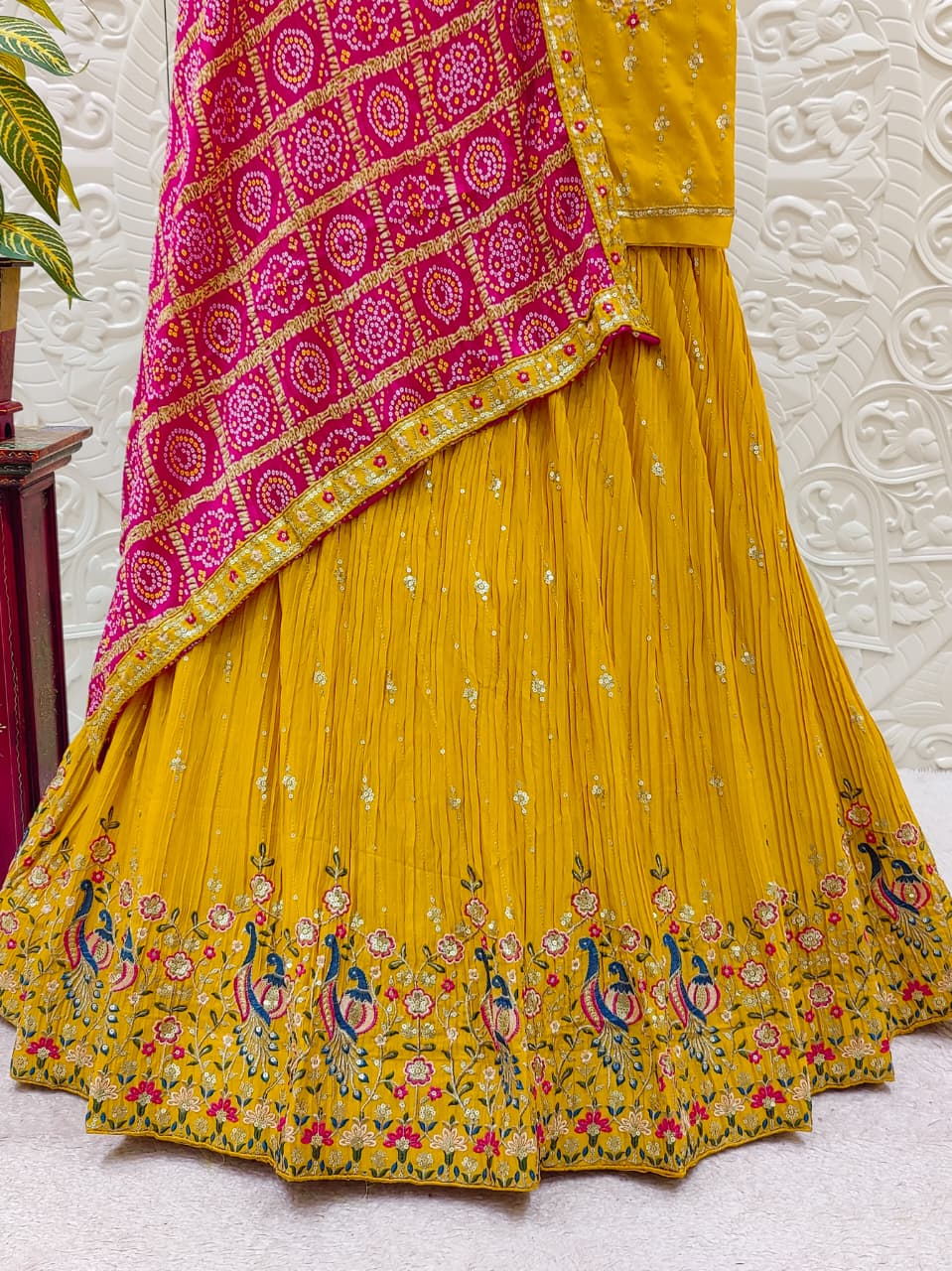
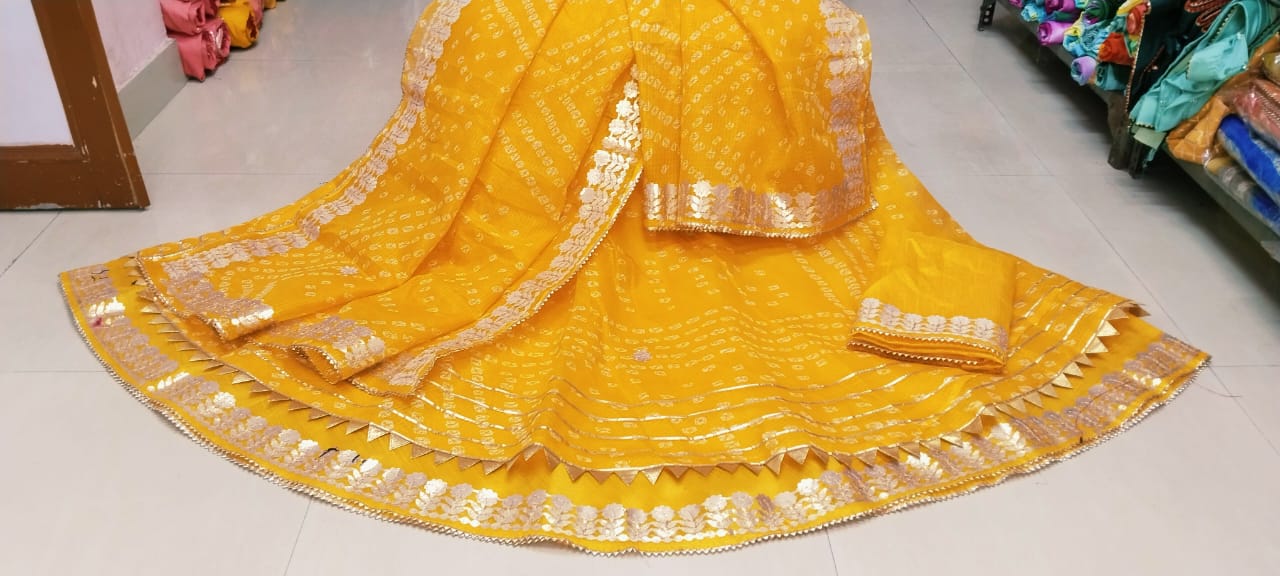
- Yellow - haldi
- Green - Teej and mehndi
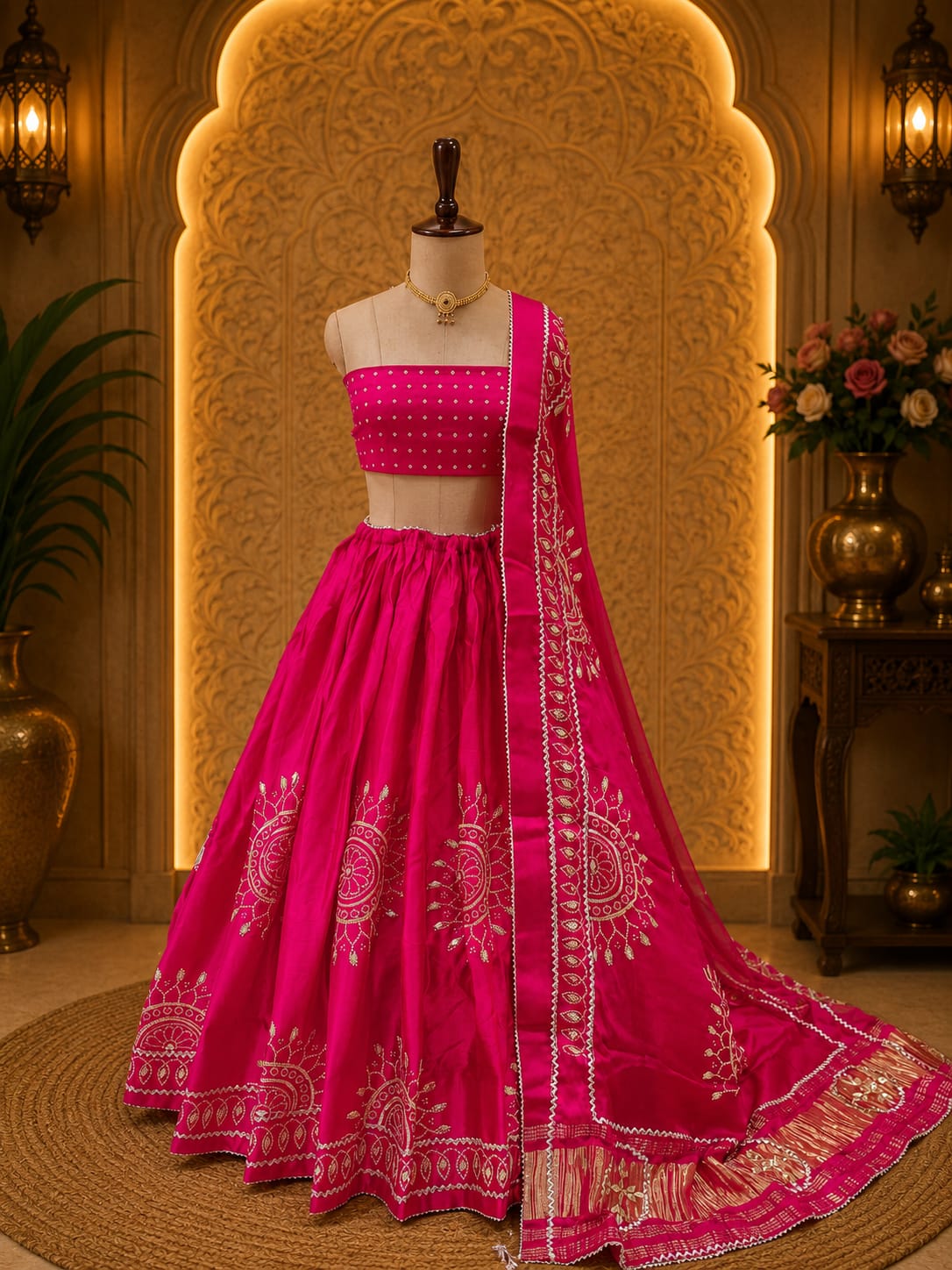
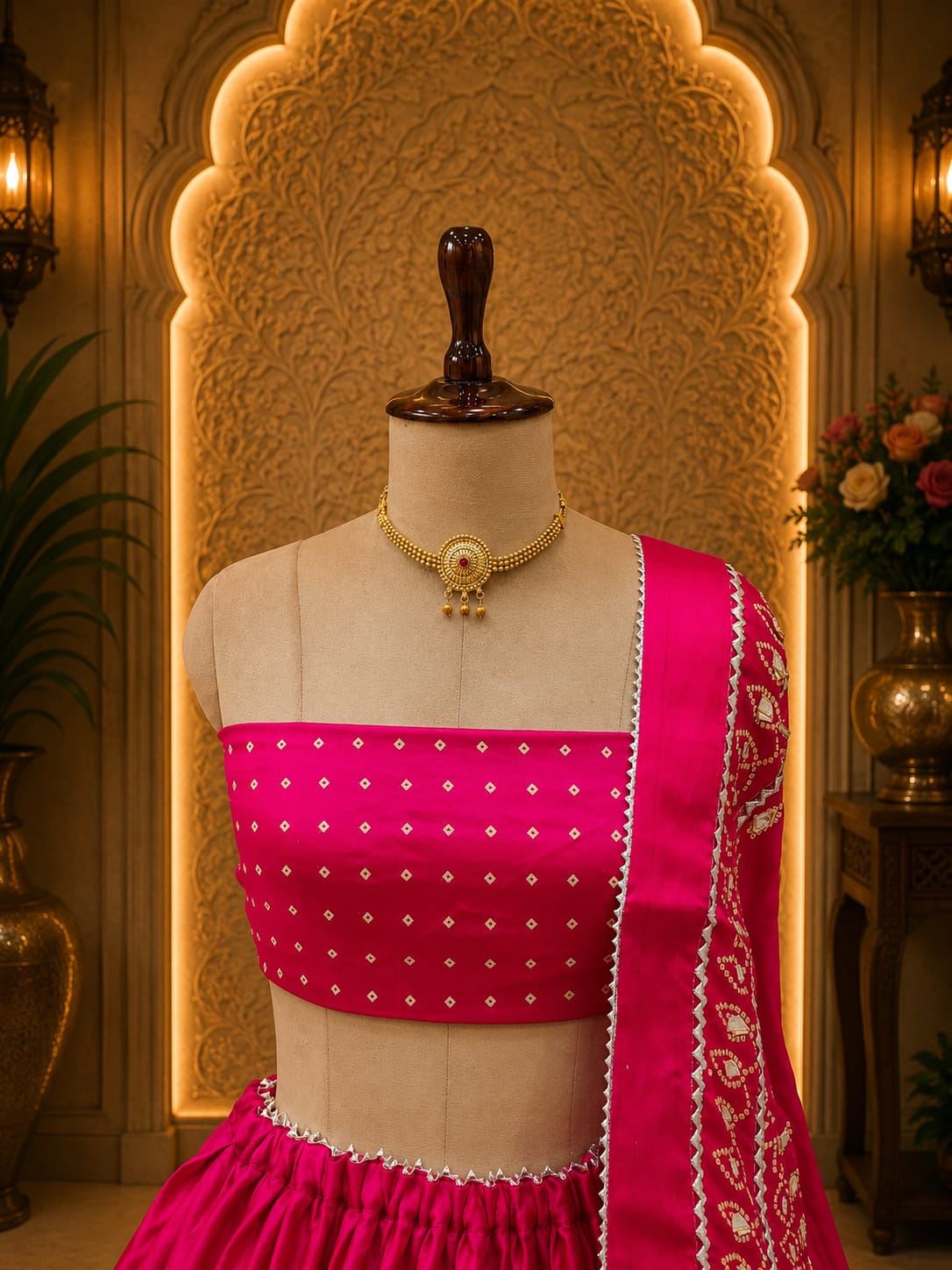
- Rani pink - suits almost every skin tone and every function. When you are confused take this.
- Black bottle green - reception, cocktail, evening party.
5. How to style a bandhani lehenga
The same skirt can be made to look three different ways.
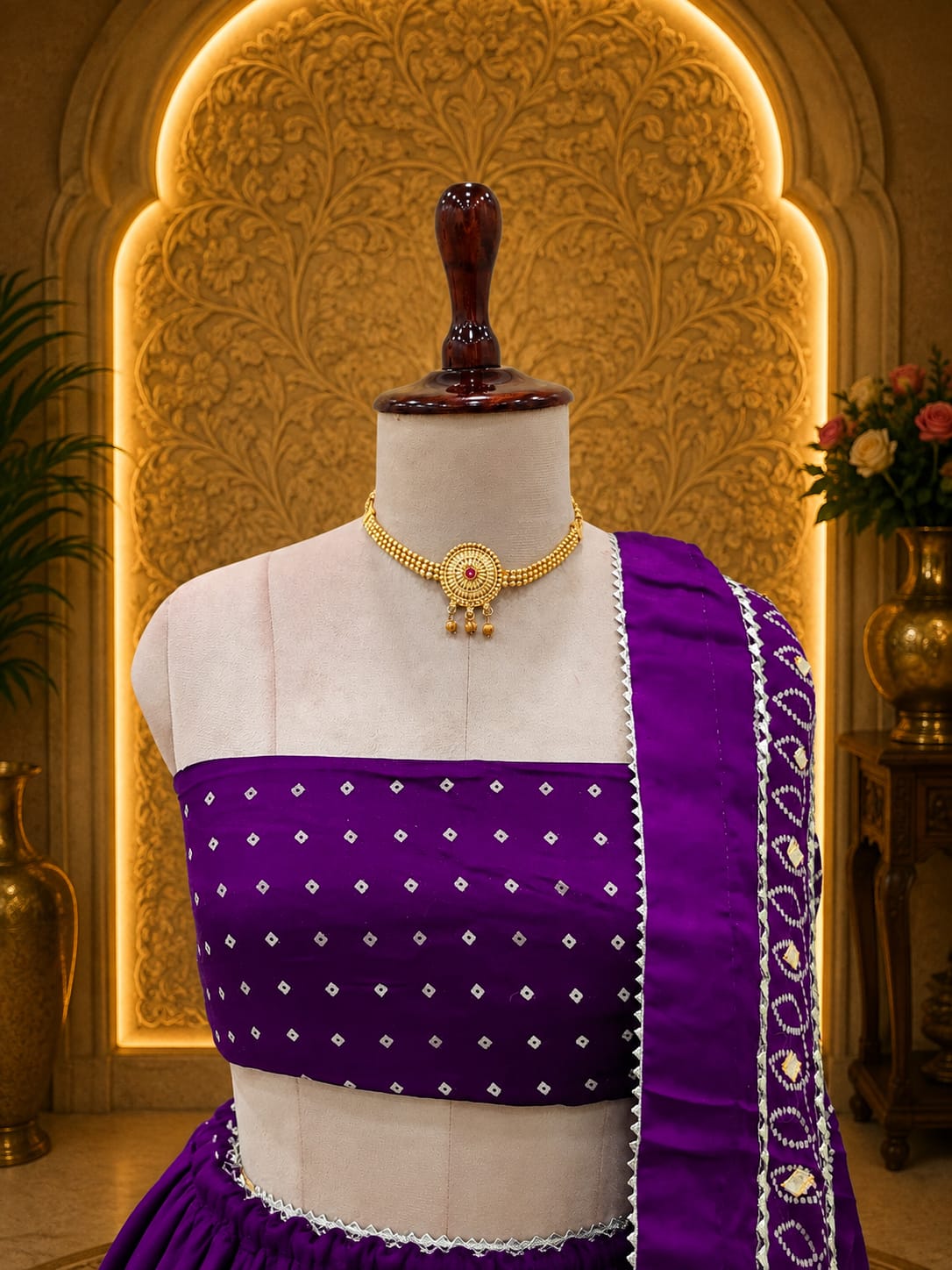
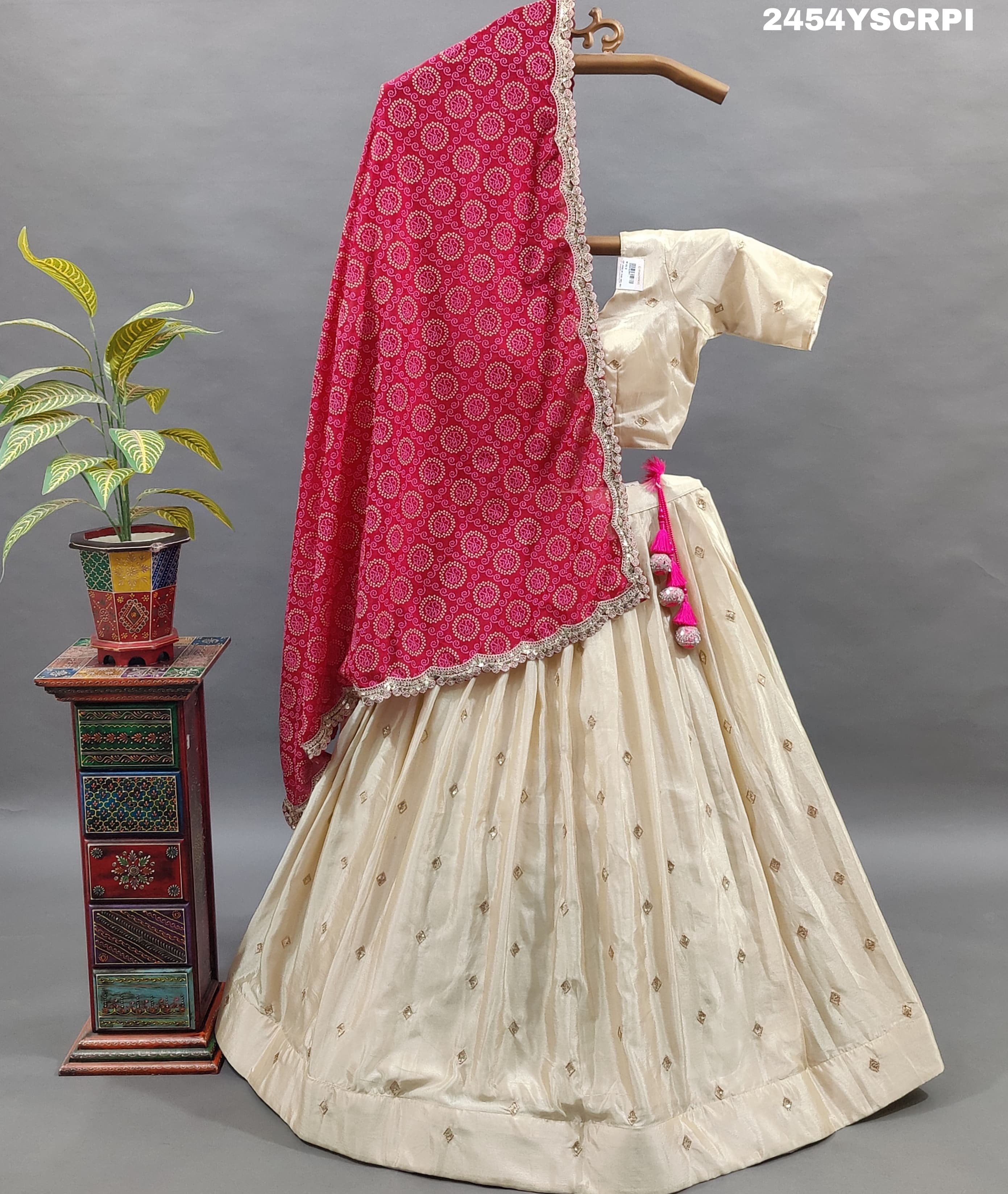
- Blouse - a plain blouse in one solid colour picked from the dupatta looks better than a full bandhani blouse bandhani on bandhani becomes too much for the eye.
- Dupatta - pin it on one shoulder for a slim look both shoulders for a heavy traditional look. Over the head only for pooja and on the wedding day.
- Belt - a thin kamarbandh over a big ghera gives shape at once skip it if the choli is long.
- Footwear - juttis or block heels. It is a floor length outfit a thin stiletto will not even be seen.
- Hair - open waves with gaji silk a neat braid for garba.
6. Jewellery with a bandhani lehenga
Bandhani already has colour and movement. So the jewellery has to pick one side loud or quiet. Not in between.
- Oxidised silver - correct for garba and navratri. Big jhumkas, layered haar, hathphool, chunky kada.
- Kundan or polki - for wedding and reception with gaji silk or pure silk. Keep the neckpiece short if the choli has a deep neck.
- Gold jadau - the traditional gujarati and rajasthani pairing with red or maroon. Best with a gharchola.
- Studs with a big maangtika - the smartest choice for a light day function. The tika does all the work.
- Do not do this - heavy necklace plus heavy earrings plus nath on a shikari piece. One loud thing is enough.
7. Real bandhani or print - how to check
Turn the cloth over In real bandhani the colour goes right through so the dots show on both sides. In a print the back side looks faint.
Look for mistakes hand tied dots are never perfectly equal. Some are bigger, some are slightly out of line. Printed dots repeat exactly like a photocopy.
Best proof of all - a good shop sends the piece with some knots still tied. You open them at home yourself. A print can never do this. Every KCPC Bandhani order go out like this.
8. Care five mistakes that spoil a bandhani lehenga
Most lehengas are not spoiled by wearing them too much. They are spoiled by one of these five things.
- Hot water - it opens the colour immediately use cold water only.
- Sunlight - it fades bandhani faster than washing. Dry it in shade and inside out.
- Plastic cover - it holds moisture and turns the fabric yellow. Wrap the lehenga in a cotton cloth instead.
- Sweat - it eats the cloth from inside after a function give it air for two or three hours before putting it in the cupboard.
- Same fold - the cloth tears at the fold line first. Change the fold every few months.
First wash is always dry clean. Only cotton and plain georgette can be washed at home cold water, a little salt, wash it alone, no rubbing. Iron on low heat with a thin cloth on top. Never iron directly on mirror work or gota.
9. What our customers say
Add 3-4 real reviews here - first name, city, and the customer's own words. No fake ones
10. Questions people actually ask
- Does the colour run?
A little in the first wash. That is how tie and dye works. It is not a defect. It settles down by the third wash always wash it alone never with other clothes. - Why is a bandhani lehenga so costly?
Because of the knots. Forty thousand knots. One thousand a day. One worker. You are paying for one month of hand work not for machine printing. - Which fabric should I take for a day function in summer?
Cotton or georgette both are light and let air pass. Keep gaji silk and pure silk for night functions they feel heavy in the heat. - Is bandhani good for garba?
It is the best option there is. Take cotton or georgette with a big ghera so it opens fully when you turn and wear oxidised jewellery so you are not worried about losing anything. - Can a bride wear a bandhani lehenga?
Yes, In rajasthan and gujarat it is the traditional bridal choice. It is not a compromise. Take red or maroon in pure silk or a proper gharchola. - Which blouse looks best with it?
A plain blouse in one solid colour taken from the dupatta. A full bandhani skirt with a full bandhani blouse becomes too much to look at. - Which jewellery should I wear?
Garba - oxidised silver. Wedding or reception - kundan or polki. Day function - simple studs with a big maangtika. Just do not wear everything heavy together. - Can I wash it at home?
The first wash should always be dry clean after that only cotton and plain georgette can be washed at home - cold water, a little salt, no rubbing, dry in shade gaji silk and pure silk, always dry clean. - Will the knots be open or tied when it comes?
We send the piece with some knots still tied. You open them at home yourself. That is your own proof that the work is hand tied not printed. - Is bandhani and leheriya the same thing?
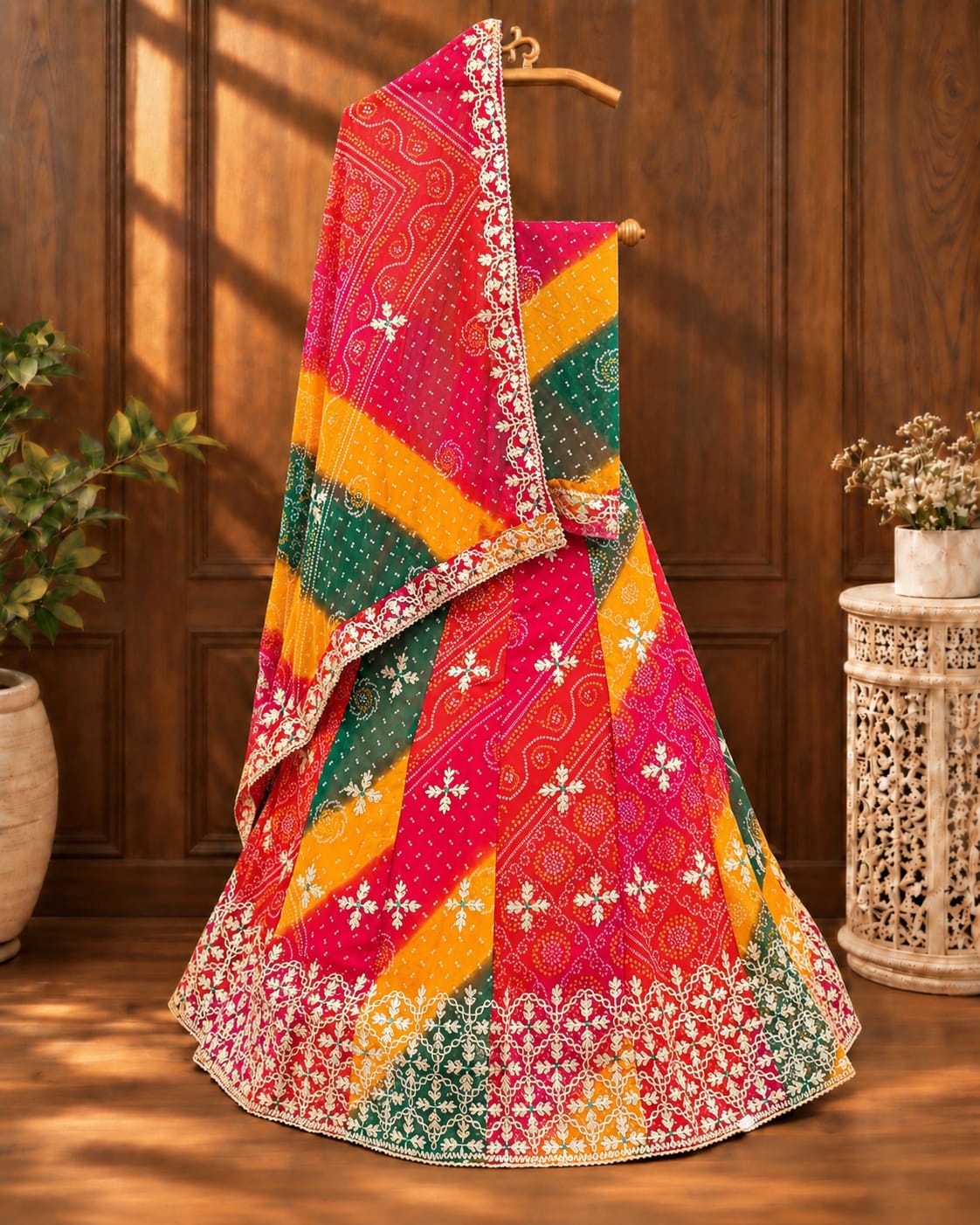
Same family of craft, different way of tying. Bandhani gives you dots leheriya gives you diagonal stripes.
In one line
Fabric by the weather. Colour by the function. One loud piece of jewellery. Dry clean, and wrap it in cotton. Do this and the same lehenga will keep coming out of your cupboard for ten years. Browse hand tied bandhani lehengas at KCPC Bandhani.